
We're so RETRO it hurts the eyes
The Tandy 1000 RL / RLX Series
"The Ultimate Home-Office MS-DOS Slimlines"

Overview
Released in 1990, the Tandy 1000 RL and its slightly more powerful sibling, the Tandy 1000 RLX, represented the final evolution of Radio Shack’s legendary consumer-focused MS-DOS line. Where earlier Tandy 1000 systems mimicked traditional, bulky desktop boxes, the RL series pivoted toward a sleek, compact "slimline" form factor. Designed specifically for mainstream household administration, home-office budgeting, and casual gaming, these machines famously came packaged with MS-DOS and Tandy DeskMate built right into ROM, allowing users to turn on the machine and immediately access a graphical desktop environment.
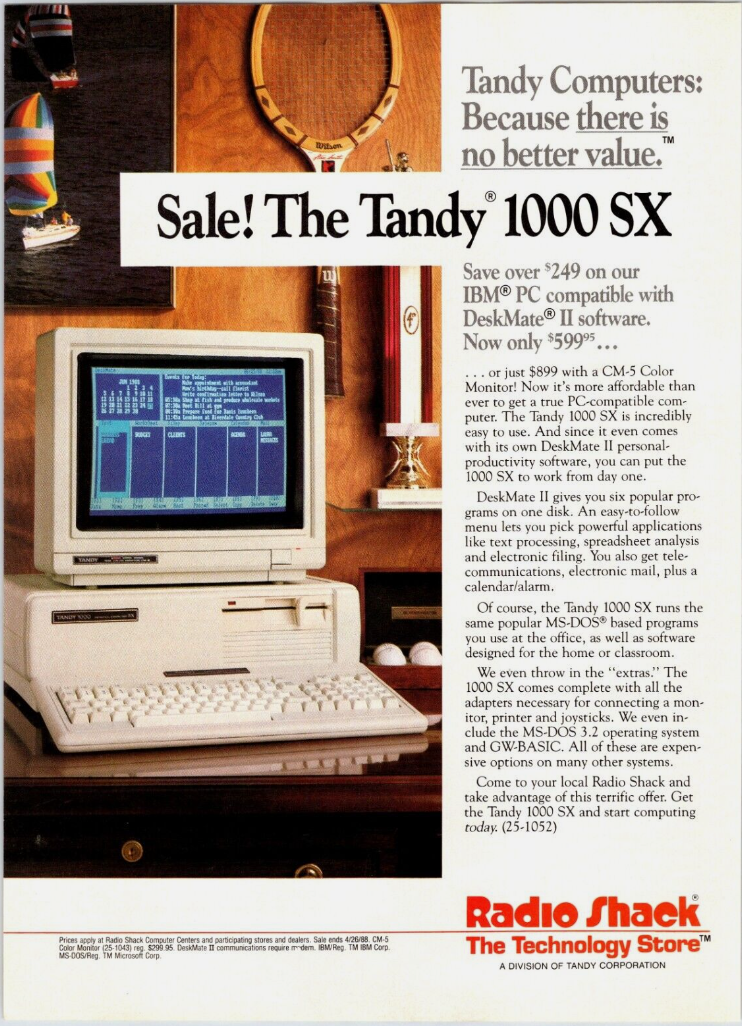
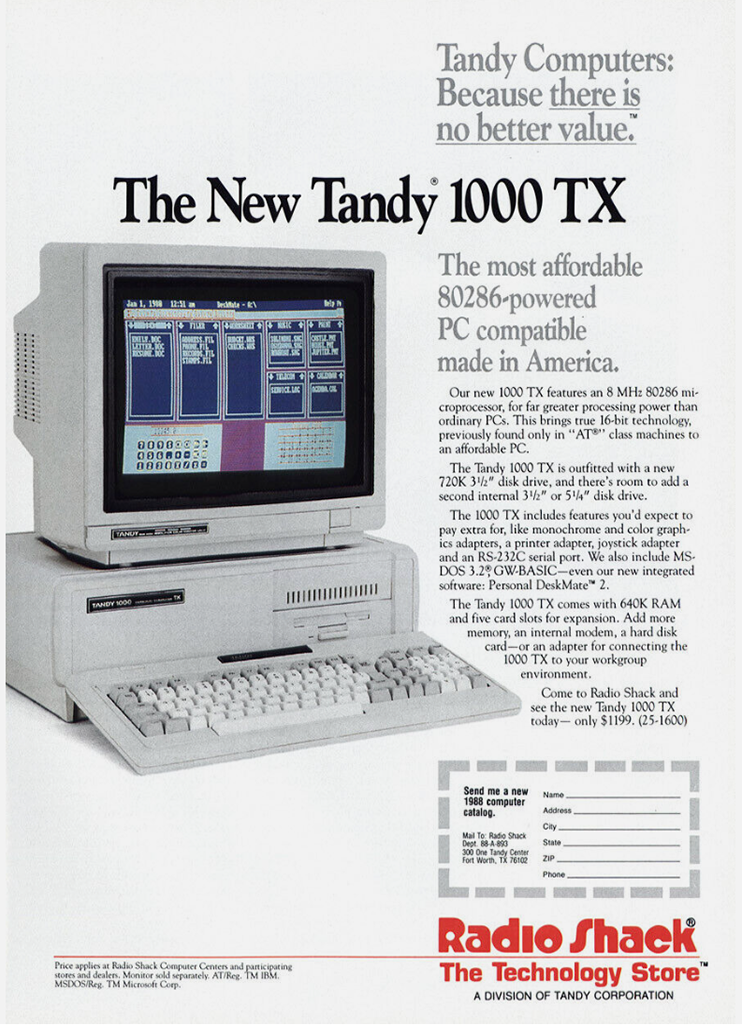
Hardware Details & Specifications
The RL and RLX shared a custom low-profile chassis design intended to sit neatly on a home desk, often underneath a monitor. Despite their small footprint, they packed significant multimedia capabilities tailored directly from Tandy's multimedia legacy.
Tandy 1000 RL (The 8-bit Entry Model)
- Processor: Intel 8086 running at 9.54 MHz
- RAM: 512 KB standard, expandable to 768 KB on-board
- Graphics: Integrated Tandy Video Graphics Adapter (TGA), supporting CGA compatibility alongside enhanced modes (up to 640x200 resolution with 16 colors from a 16-color palette)
- Sound: Standard Tandy 3-voice sound chip (compatible with TI SN76489), delivering legendary musical and sound-effect capabilities for DOS games of the era
- Storage Options: Shipped in configurations ranging from a single 3.5-inch 1.44 MB floppy drive up to the RL-HD variant, which included a built-in 20 MB IDE hard drive
- Operating System: MS-DOS 3.3 and DeskMate loaded in ROM for instant-on capabilities
Tandy 1000 RLX (The 16-bit Mid-Range Model)
- Processor: Intel 80286 running at 10 MHz
- RAM: 1 MB standard RAM, allowing clean utilization of extended memory
- Graphics & Sound: Retained the signature Tandy 3-voice sound and TGA graphics architecture
- Expansion: Offered increased horsepower and architectural headroom for running early Windows 3.0 applications and multitasking environments compared to its 8-bit RL counterpart
Competitors in the Marketplace
When the RL and RLX dropped in 1990, the budget PC landscape was fiercely competitive. They went head-to-head against:
- IBM PS/1 Series: IBM's consumer-focused machine also targeted the home market with built-in software, but usually commanded a higher price tag and lacked the rich 3-voice sound standard that retro gamers loved on Tandy systems.
- Generic 286/386SX "White Box" Clones: Local computer shops and mail-order giants were beginning to flood the market with cheap desktop clones. While these offered faster raw speeds, they lacked the appliance-like simplicity and software bundle of the Tandy RL line.
- Commodore Amiga & Atari ST: Though non-PC competitors, these systems were still actively fighting for the home-office and multimedia dollar, though the unstoppable corporate march of MS-DOS software ultimately favored Tandy's architecture.
Market Acceptance and Success
The Tandy 1000 RL series occupies a fascinating space in Radio Shack's history. By 1990, the writing was on the wall for proprietary retail electronics chains trying to manufacture computers as the industry standardized around generic white-box IBM clones.
Radio Shack marketed the RL line less like an intimidating piece of office tech and more like a home appliance. Bundled heavily with DeskMate, it appealed directly to non-technical consumers who wanted to manage recipes, balance checkbooks, and write letters without typing complex DOS commands. For retro gaming enthusiasts, the RL series remains celebrated because it retained the Tandy 3-voice sound chip at a time when standard IBM PCs only featured a basic PC speaker.
Despite positive reviews for its quiet operation, compact footprint, and user-friendly setup, the RL and RLX lines were among the final gasps for Tandy's proprietary PC manufacturing. Soon after, Radio Shack shifted away from building their own computers entirely, opting instead to retail third-party brands—making the RL/RLX series a beloved, highly specific chapter in the legacy of the Tandy Computer Center.
Original Commercials & Videos
Take a nostalgic look back at original television advertising campaigns that introduced the Tandy 1000 RL and RLX series to households across America:
Radio Shack Tandy 1000 RL & RLX Commercial (1991) — Source: [YouTube]
RadioShack Tandy 1000 RLX TV Advertisement (1993) — Source: [YouTube]