We're so RETRO it hurts the eyes
The Tandy 1000SX/TX PC's
The MOST compatible PC Jr's
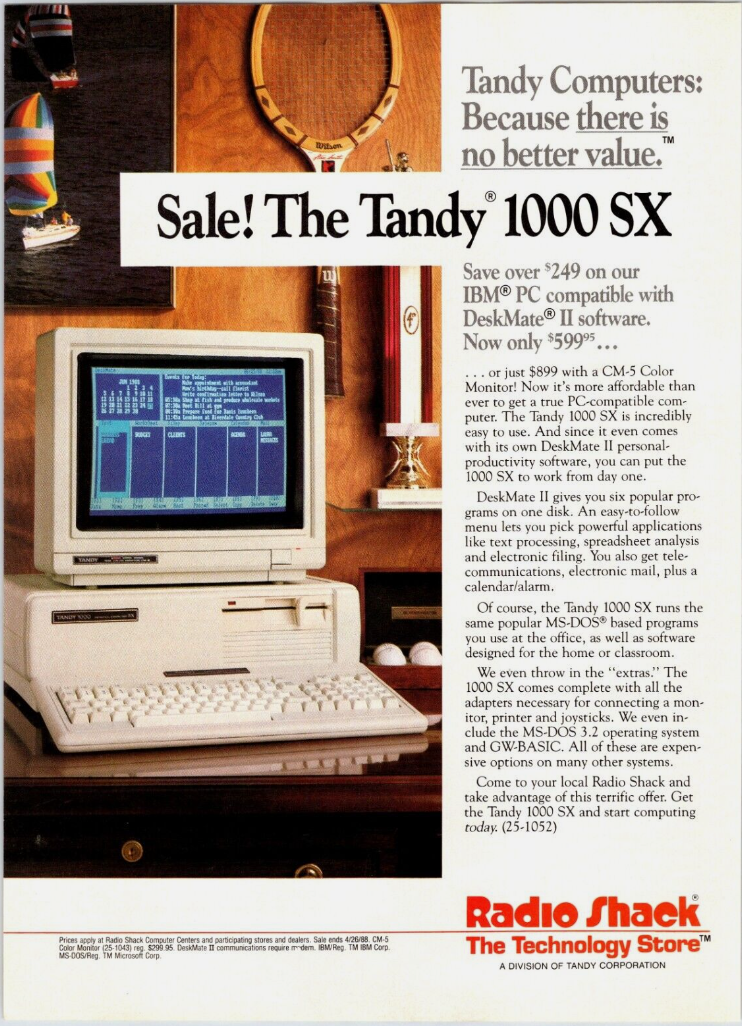
In the never ending effore to stay competitive in a fast changing market, in 1986 Tandy released the Tandy 1000SX. While the original Tandy 1000 was a success, it wasn't perfect. Tandy attempted to remedy many of the 1000's flaws in the SX model, and improve the platform overall. Upgrading and expanding the PC's capabilities were now much easier, and adding a faster 'Turbo' mode, and DMA controller. These changes/improvements have led many to consider the Tandy 1000SX one of the best IBM compatibles of the 80's.
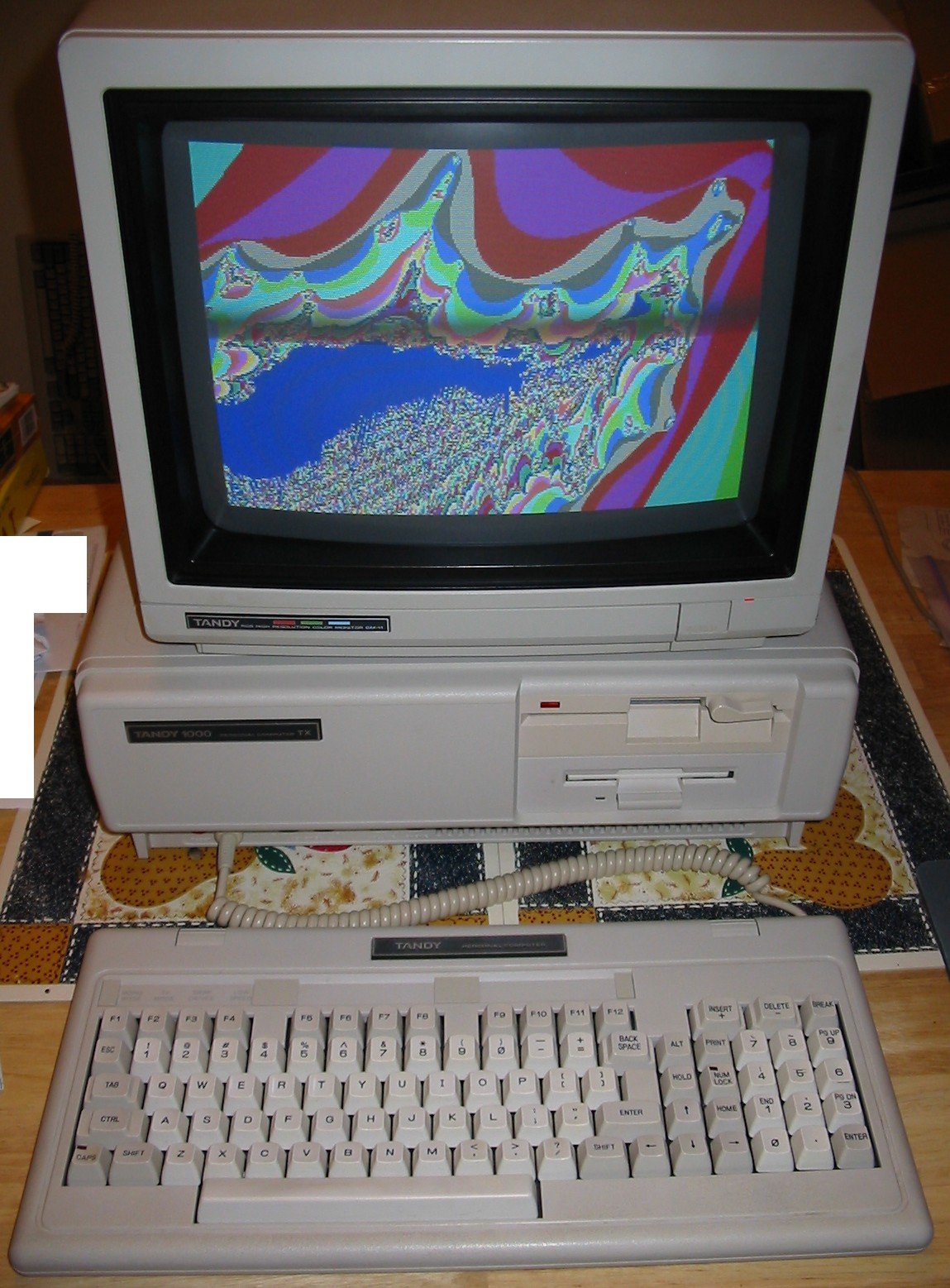
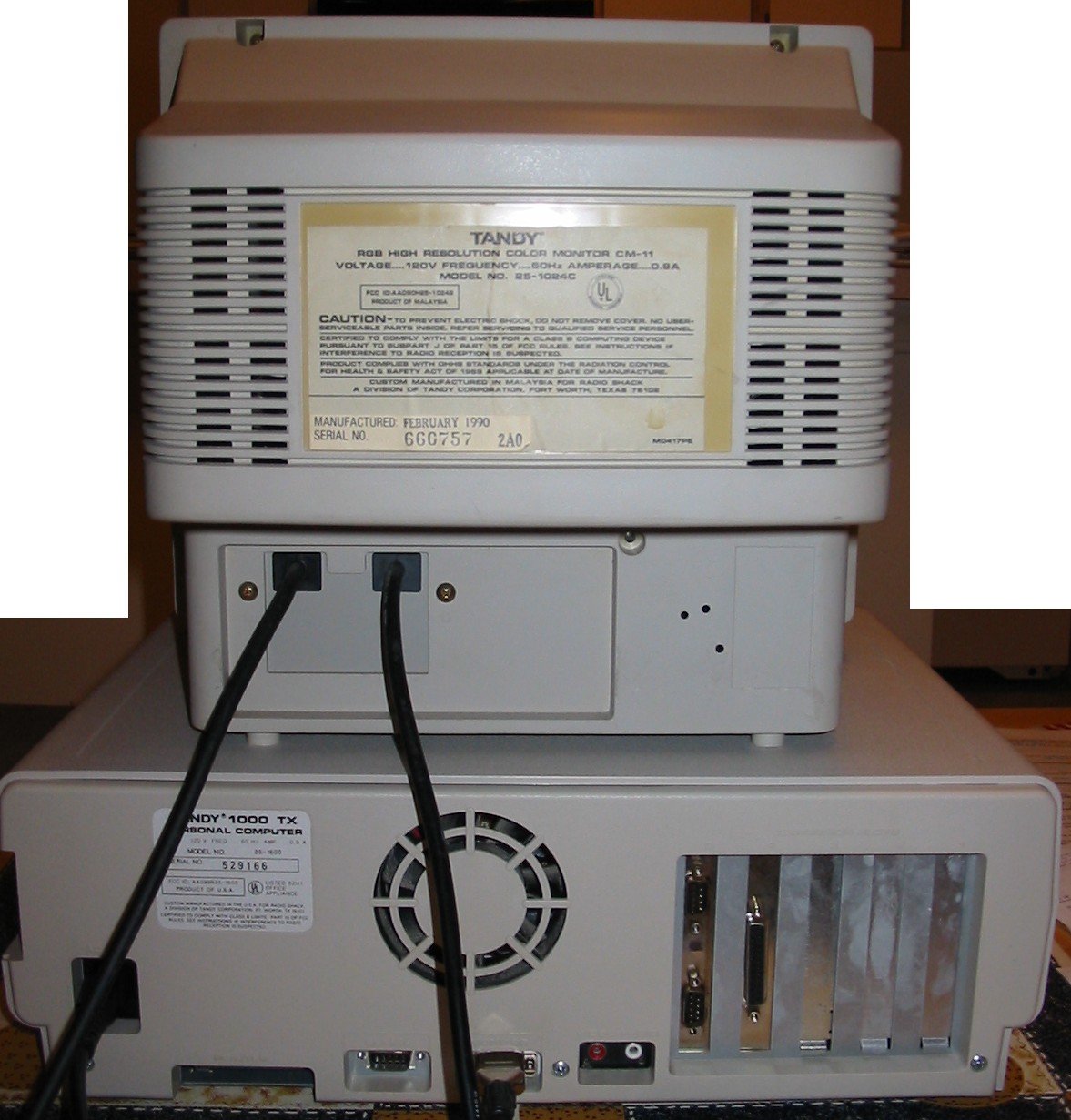
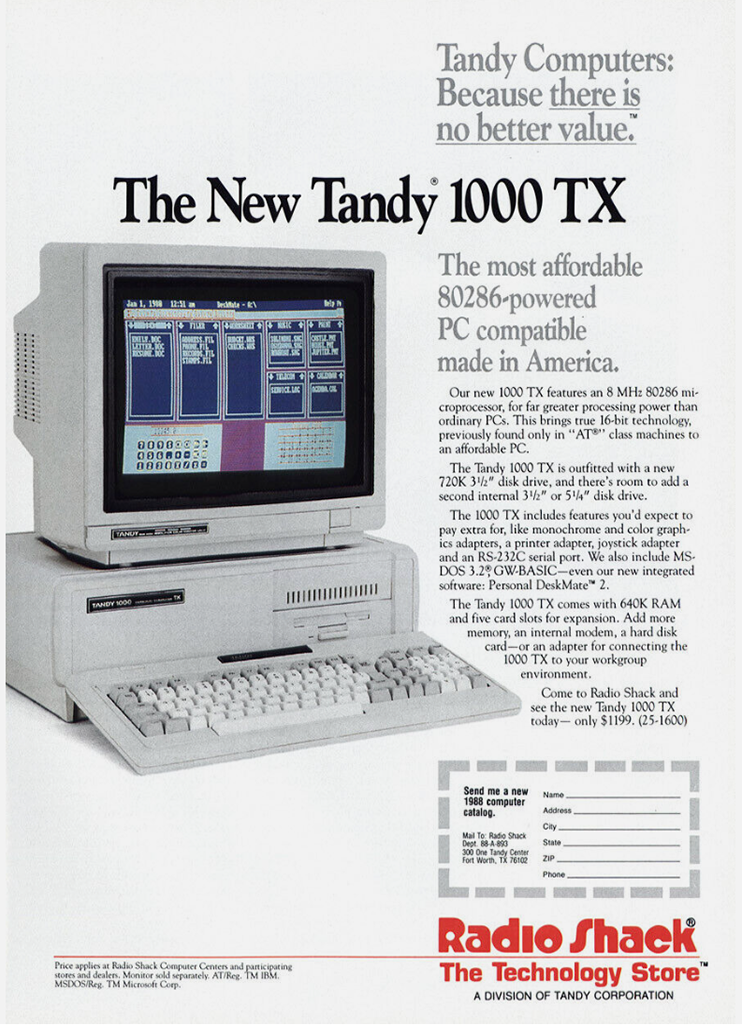
The Tandy 1000 TX is basically a Tandy 1000 SX with an Intel 80286 processor, 640 KB RAM, a 3 and a half inch 720 KB floppy disk. All of the machines in this series, although 8-bit, have a 16-bit memory bus and are technically expandable up to 768 KB but the extra 128 KB is for video. It runs MS-DOS 3.2 with Deskmate II.
| Tandy 1000TX | |
| Manufacturer: | Tandy Corporation |
|---|---|
| Form Factor: | Compatible PC |
| Clock Speed: | 8 MHz |
| Memory Size: | 640 KB expandable up to 768 KB |
| Graphics: | Tandy Graphics |
| CPU: | Intel 80286 |
| Operating System: | MS-DOS 3.2, Deskmate II |
| Tandy 1000 SX | |
| Manufacturer: | Tandy Corporation |
|---|---|
| Form Factor: | Compatible PCs |
| Clock Speed: | 7.16 MHz |
| Memory Size: | 384 KB standard, expanded to 640 KB |
| Graphics: | Tandy Graphics |
| CPU: | Intel 8088 |
| Operating System: | MS-DOS 3.2, Deskmate II |
Upon it's release in 1986, the Tandy 1000SX was a hit with reviewers and PC afficinados. Gone were the issues of the original Tandy 1000 (difficulty with upgrades, and compatibility), not to mention the venerable PC Jr. The SX had 5 ISA expansion slots, and could be upgraded to 640k on the motherboard, without special cards, would accept EGA or VGA graphics, hard disk controller and a math co-processor - added by inserting the chip, and removing a jumper. The 'as built' RAM configuration of 384k was immediately upgradeable to 640k with standard RAM chips and had DMA integrated. Tandy included MS-DOS 3.22 and DeskMate; with MS-DOS, the 1000 SX also supported 720k floppy drives, and the capability to boot from either floppy drive. At boot, the CPU speed was selectable between 4.77 & 7.16MHz for software compatibilty purposes.
It should be noted that the Tandy 1000 SX and 1000 EX were functionaly identical - the main differences being in form factor and upgrade methods. Like the EX, the SX also supported video resolutions of: 160x200x16, 320x200x16, and 640x200x4. For games that ran too slow on the 8088-2 CPU, there was an accelerator card, the 286Xpress, that gave the SX a bit more horsepower.
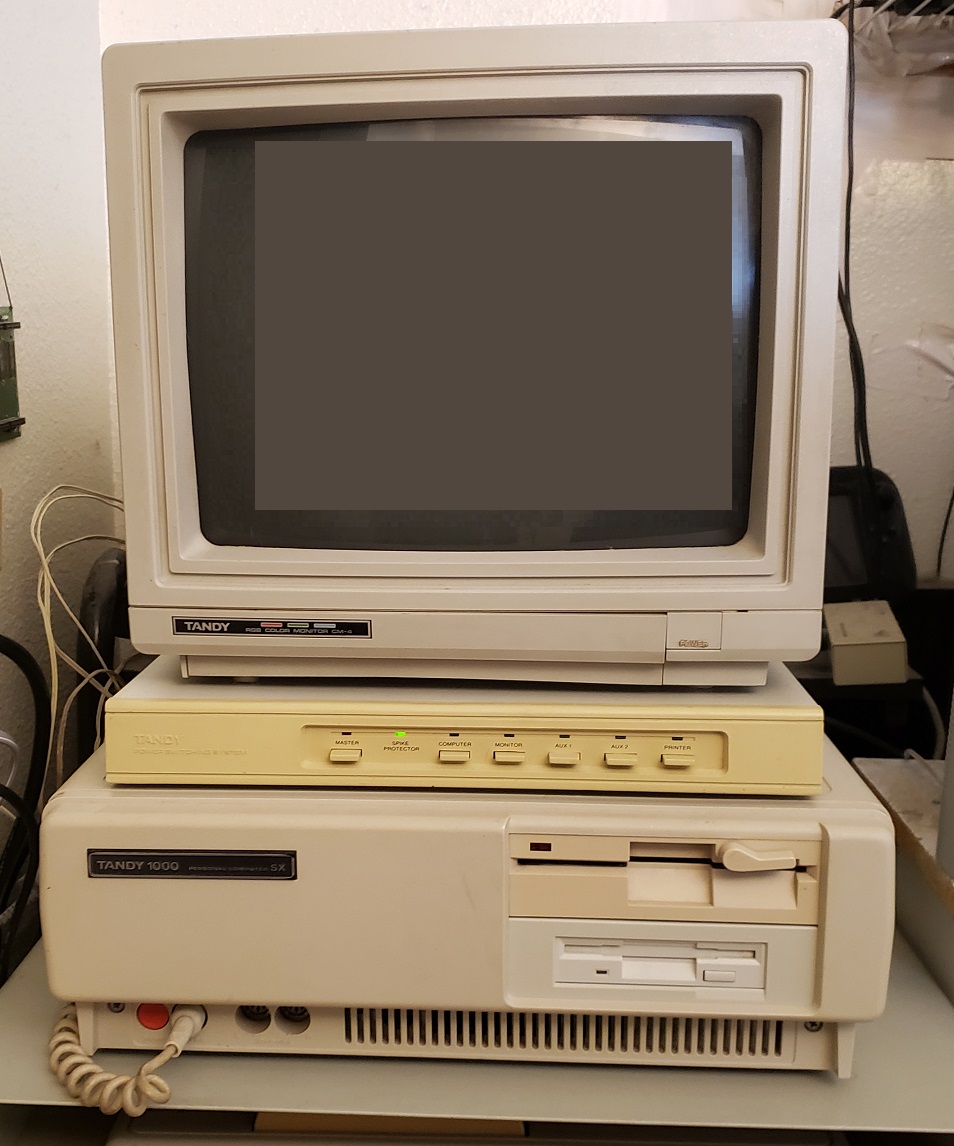


The Tandy 1000TX was the last of the PC Jr. compatible Tandy 1000 line. Powered by an Intel 80286 CPU clocked at 8MHz, it was also quite powerful for the time. Functionally, it's a Tandy 1000SX with an 80286 CPU, and 640k RAM standard. While being upgradeable to 768k, that extra 128K of RAM is solely reserved for video. The TX came with an installed 3.5" 720K floppy disk, with the option for another or a 5.25" drive. While the 80286 CPU was a 16 bit processor, in the TX series PC's was still an XT class computer, not an AT class, since it was operating on the same 8 bit data bus as previous Tandy 1000 models. Therefore, it could not operate in the 80286 protected modes or perform the 16 bit memory and I/O data transfers in a single CPU cycle. Like others in the series, the TX came with MS-DOS and DeskMate. Like the Tandy 1000SX, the TX also had integrated floppy controller, DMA, enhanced CGA supporting all CGA/Tandy modes, and three voice sound.
Market Highlights and Reception
When IBM launched the PCjr to capture the home market, it stumbled due to high costs, awkward chiclet keyboards, and severe hardware limitations. Sensing an opening, Tandy released the original Tandy 1000 in 1984 as a more logical, fully compatible alternative that integrated PCjr-style graphics and sound enhancements directly onto the motherboard. By the time the SX and TX arrived, the original Tandy 1000 had already become Radio Shack’s best-selling computer. The SX and TX were designed to address structural complaints of earlier models—such as a lack of standard expansion slots, sluggish processing speeds, and missing DMA controllers—while capitalizing on the booming demand for affordable "white-box" IBM clones.
- The "Best Bang for Your Buck" Consensus: Reviewers and consumers heavily praised the Tandy 1000 SX for returning to a standard desktop modular form factor with five full 8-bit ISA expansion slots, bypassing the proprietary slot limitations of concurrent models like the 1000 EX. It was widely viewed as an accessible machine that allowed everyday users to easily upgrade RAM, add hard card storage, or swap out controllers.
- The Home Market Champion: While corporate buyers gravitated toward IBM, Compaq, or high-end AT clones, Tandy captured a massive slice of the residential and educational sectors. By 1986, Tandy secured roughly a 9.5% share of the US home computer market, with internal reports noting that roughly half of all Tandy compatibles were purchased for home use.
- Bundled Value: Like its predecessors, the SX and TX benefited greatly from being bundled with MS-DOS and DeskMate (Tandy's user-friendly graphical desktop environment). For families and home offices, this meant the computer was ready for productivity out of the box without requiring expensive software add-ons.
- The De Facto Gaming Standard: Because standard IBM PCs and XTs shipped only with basic monochromatic or low-color CGA graphics and a primitive internal PC speaker, developers quickly realized that the Tandy 1000 offered a superior multimedia canvas. The hardware supported a 16-color graphics mode (320x200 resolution) and an SN76496 3-voice sound chip (compatible with the PCjr audio standard).
- Software Support: Major software houses—including Sierra On-Line and others—actively built specific "Tandy graphics and sound" routines into their games. Titles like King's Quest and Thexder sounded and looked drastically better on a Tandy 1000 SX or TX than on a standard IBM PC. In many late-1980s software catalogs, owning a Tandy 1000 was a distinct badge of honor for computer gamers.
Technical Legacy and Eventual Decline
- The SX vs. TX Pivot: The SX relied on an Intel 8088 processor (with a turbo toggle up to 7.16 MHz), making it an immensely reliable workhorse for traditional 8-bit software. The TX stepped up performance by introducing an Intel 80286 CPU clocked at 8 MHz alongside 3.5-inch floppy drives. However, the TX occupied a strange transitional space: while it used a 16-bit CPU, it retained an 8-bit data bus architecture, meaning it functioned more like a high-end XT than a true AT-class system.
- Obsolescence: By the dawn of the 1990s, the landscape shifted rapidly. The introduction of dedicated, standardized audio cards like the AdLib and Creative Labs Sound Blaster (which brought digital audio PCM playback) neutralized Tandy's proprietary 3-voice audio advantage. Simultaneously, cheap VGA graphics and falling prices for generic IBM-compatible clones eroded Tandy's market margins.