
We're so RETRO it hurts the eyes
The Tandy 2500 Series
"Radio Shack's Small-Footprint Low-Profile MS-DOS Machines"
Overview & Origins
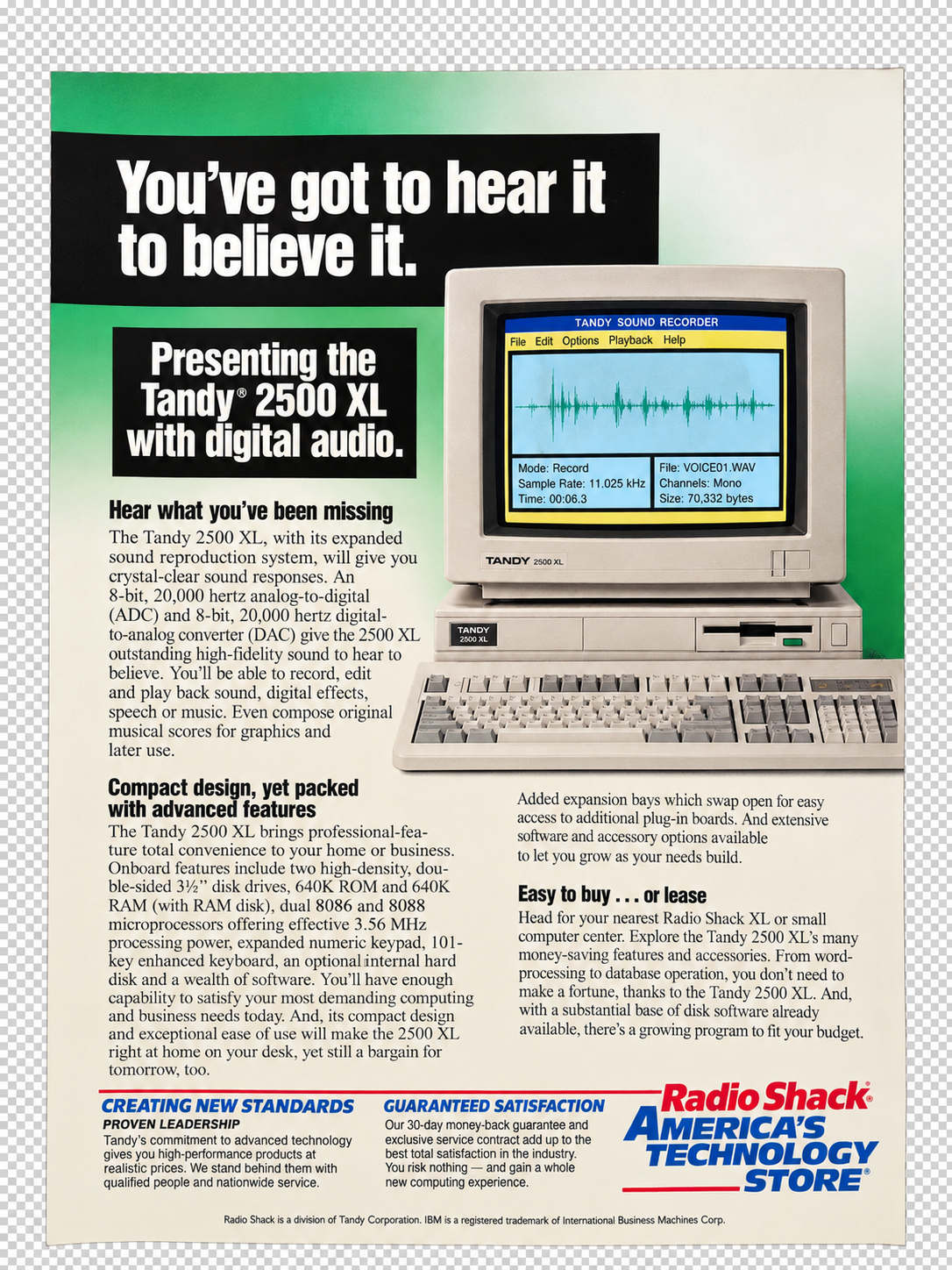
Introduced in the early 1990s, the **Tandy 2500 series** represented a distinct pivot in Radio Shack's computer strategy. Departing from the bulky desktop cases of older 1000 and 3000 systems, the 2500 family adopted a sleek, low-profile form factor. Historically tied to technical DNA originating from the Victor Company (famous for precision engineering like WWII Norden bombsights), these slim machines were built to pack integrated VGA graphics, sound capabilities, and flexible CPU options into a tidy desktop footprint designed to sit directly under a monitor.
Comprehensive Breakdown of All 2500 Models
The 2500 product line went through several generational revisions, scaling from baseline 286 processors up to high-performance 386SX chips:
- Tandy 2500 XL & XL/2 (Catalog # 250-4074 / 4075): The foundational models of the series. Built around low-power 16-bit architectures, these systems targeted casual home offices and educational accounts, emphasizing quiet operation and instant-on software accessibility via DeskMate.
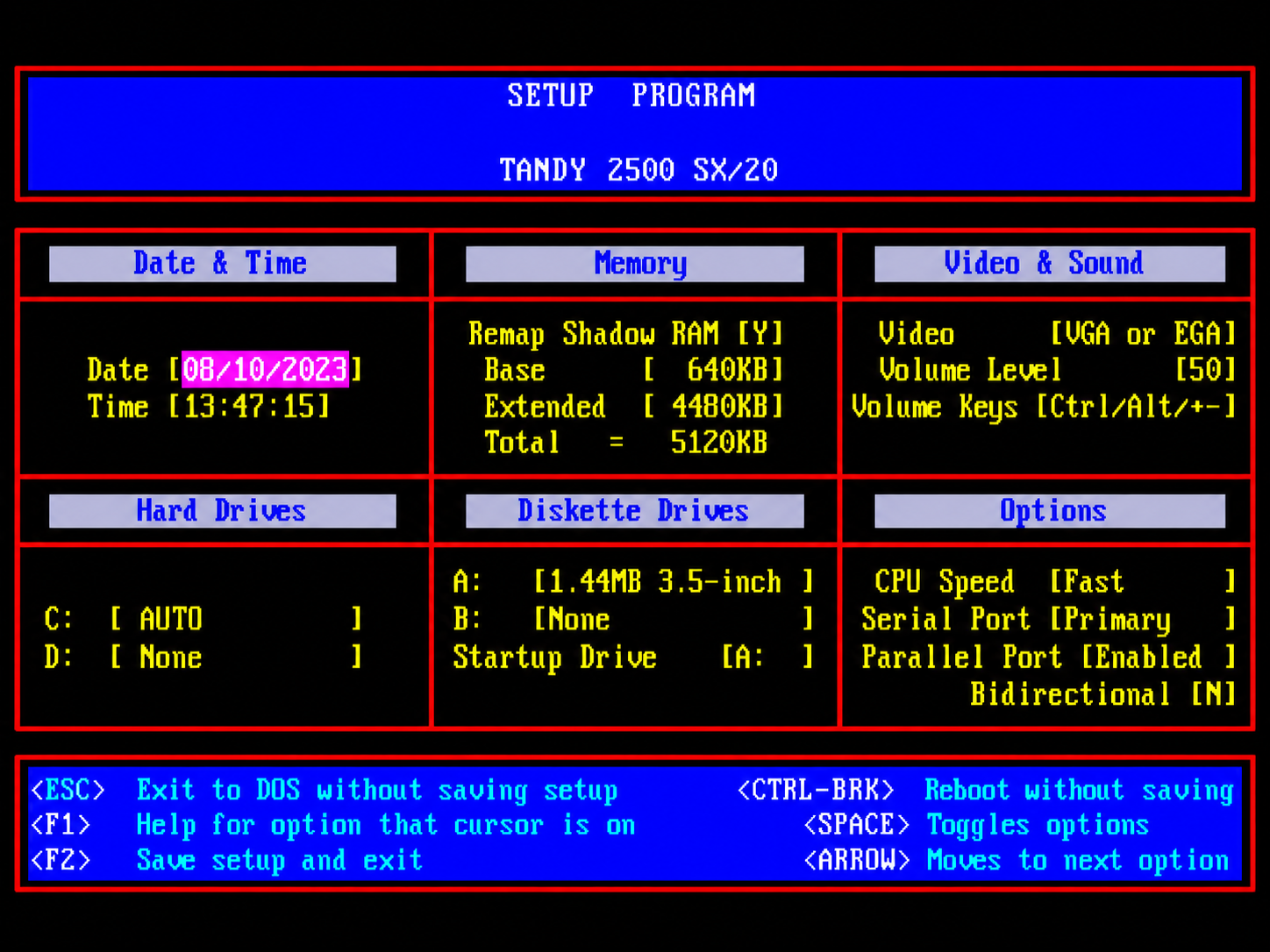
- Tandy 2500 SX / SX/20 (Catalog # 250-4076 /): Stepped up into the 386 era by incorporating the Intel 386SX processor running at 16 MHz or 20 MHz. This allowed users to run early multi-tasking environments and protected-mode DOS software while retaining backward compatibility.
- Tandy 2500 SX/25 & SX/25 HD (Catalog # 250-1611 / 1610): Pushed the 386SX clock speed to 25 MHz, offering increased throughput and bundled factory IDE hard drive configurations (ranging from 40MB up to 120MB) for small businesses.
- Tandy 2500 RSX & RSX/HD (Catalog # 250-1620 / 1621): A powerful upper-tier 25 MHz 386SX system. It featured onboard video memory upgradeability (allowing users to expand from 256 KB to 512 KB VRAM to unlock higher resolutions like 800x600 in 256 colors or 1024x768 in 16 colors), alongside robust expandability supporting up to 9 MB of RAM via 30-pin SIMMs.
- Tandy 2500 SX/33 (Catalog # 250-1623): The final and most powerful iteration of the desktop line, squeezing an aggressive 33 MHz 386SX processor into the slimline chassis.
Core Technical Specifications Matrix
- Processors: Ranged from 16-bit custom CPUs (XL) to Intel 386SX chips clocked from 16 MHz up to 33 MHz.
- Memory Architecture: Started with 1 MB standard on-board RAM, expandable up to 9 MB using standard 30-pin SIMMs.
- Video Subsystem: Integrated VGA controller built onto the motherboard, featuring expandable Video RAM (from 256 KB standard to 512 KB via DIP/ZIP sockets) to support enhanced SVGA resolutions.
- Storage: Standardized on 3.5-inch 1.44 MB high-density floppy disk drives, paired with internal IDE hard disk options (ranging from 20 MB to 120 MB+).
- Operating System: MS-DOS with Tandy's graphical user interface, DeskMate.
Competitors in the Marketplace
By the time the 2500 series rolled out in the early 1990s, Radio Shack faced intense pressure from changing industry currents:
- IBM PS/1 & ValuePoint Series: IBM's consumer and value lines fought for the exact same compact, desktop-appliance space. While IBM carried heavy brand recognition in corporate purchasing departments, Tandy's integrated graphics and aggressive retail bundling gave it a distinct edge in local consumer markets.
- Clone Manufacturers (Gateway 2000, Dell, AST): Mail-order and direct-sales clone builders were rapidly dominating the PC landscape with cheaper, highly expandable tower and desktop systems. While standard white-box clones offered easier multi-slot expansion, they lacked the neat, low-profile footprint and appliance-like integration of the Tandy 2500.
Market Reception and Legacy
The 2500 series occupies a bittersweet chapter in Radio Shack history. While engineering reviews praised their quiet footprint, high level of motherboard integration, and flexible upgrade paths, the line struggled commercially. By the early 1990s, the consumer shift toward generic IBM-compatible white-box PCs—combined with Radio Shack's pivot away from proprietary hardware manufacturing—meant the 2500 series would be among the final desktop computers built directly by Tandy. Today, they are prized by retro computing enthusiasts as robust, space-saving 386-era DOS workstations.
Overview & Video Demonstration
Watch a hands-on review showcasing the hardware configuration and working state of a classic Tandy 2500 SX/25 system:
Tandy 2500 SX / 25 Hardware and System Overview — [Tandy 2500 SX / 25 "Hard Drive" Computer - Happy #SepTandy](https://www.youtube.com/watch?v=1FvDWjVlhFA)